Meet the employee!

Jan Tengborg – Sales Engineer, Spare Part Sales, Trident BMC

 
This long-time team member has dedicated 49 years to the company. Over the course of an impressive career, he has experienced numerous changes — from his early days as a young electrician at the shipyard to his growth into a respected expert and leader.
This interview shares a story, experiences, and insights that can inspire the next generation of engineers.


There have, of course, been a lot of different projects, travels, and situations over the years, but I would say that meeting all kinds of people stands out — and I’ve made friends for life.

Q: When you started working at the company, what were your beginnings like?

A: I started at Götaverken’s ship repair yard in Gothenburg on August 16, 1976. It began with a two-year training to become a ship electrician. Since then, there have been a number of mergers, restructurings, and name changes between different companies, which has resulted in me now wearing the Trident BMC logo on my T-shirt. 

Q: Looking back to when you first joined the company, what had your journey been like up to that point?
A
: I worked as an electrician for 17 years, with assignments at the four shipyards we had in Gothenburg at the time, among other responsibilities. I was then offered the chance to start working with the purchase of materials for our projects and installations. This later developed into sales of electrical equipment. At the beginning of the 2000s, our head office was in Uddevalla, north of Gothenburg, while we continued to have a workshop and office in Gothenburg. In 2004, I took over as site manager at the office in Gothenburg. At that point, we were approximately 30 men servicing the shipyards, ship owners, and shipping companies with electrical service, installations, and electrical equipment in our area. In 2012, the merger with our HVAC department took place, and I then took over as sales manager in the spare parts department. In 2023, I felt it would be nice to step away from managerial responsibility and took a step back to work as a sales engineer, focusing on spare parts sales. I have greatly benefited from all the experience I’ve gained in the roles I’ve held and in what I do now.


Q: Your journey has been truly inspiring and shows how far hard work can take you. I’m also curious — what made you decide to join this particular company?
A
: I was 16 years old and had to choose an education. The education offered by the industries in Gothenburg – SKF, Volvo, and the shipyards – also included a monthly salary, which was tempting at the time. I sometimes regret that I didn’t study further at university, but it has gone well anyway. The job has been very exciting since then, because no two days were ever the same, and I met many interesting people from different parts of the world. I have also had many different exciting tasks, which meant that I was often “new on the job” and had to learn new things.

Q: Over all these years, the company, industry, and technologies have changed a lot.

A: The shipyards in Gothenburg have been gone for many years, and the shipping industries in our region have decreased. On the areas where the shipyards once were, there are now nice homes and other businesses. There are a lot of ship owners nearby for whom we provide some service, but most of our business is abroad these days. There is less contact with the people onboard nowadays, and the customers are organizing their purchases through different purchasing systems, which I think is sad because you miss that personal contact.

Q: And the department you work in — how has it evolved over the years?

A: There are a lot of people and many personalities who have come and gone during all these years. You’ll probably miss all the old and new friends the most when you decide to retire. Both colleagues and customers. Today’s colleagues are great, and it’s a joy to come to work and chit-chat.

Q: During such a long career, you’ve surely had many interesting projects.
A
: There have, of course, been a lot of different projects, travels, and situations over the years, but I would say that meeting all kinds of people stands out — and I’ve made friends for life.

Q: Since relationships have been so important, I’m wondering—how has your role within the company changed over time?
A
: I wasn’t very tough when I came to the yard as a young man. You learned quickly — both good things and sometimes not so good ones. When I started working in the office, it was a totally different environment, and I had to learn new things. One of the most significant changes was when I became a manager and had to be the boss of my former colleagues — not always easy.

Q: I can imagine that wasn’t easy at all. And what about the technology?
A
: All the technical changes and tools — both for the people in the field and for those in the office — have, of course, made the work easier. I’m old enough to remember when the mobile phone and the internet were two big changes.

Q: I believe those were real game changers. You probably also notice how expectations for engineers have changed. What skills are key in your work today that weren’t needed before?
A
: I don’t know. Engineers today have a good education. They need experience. There is often more work and fewer people, with a time pressure on the projects.

Q: And finally: if you could give one piece of advice to young engineers just starting their careers, what would it be?
A
: Always keep an open mind, don’t be afraid to ask questions, and listen to your more experienced colleagues.

Q: Jan, thank you for taking the time to share your story with us. Your dedication and experience are truly admirable. We wish you continued success!
A: Thank you!


Interview conducted by Agata Dzienski, Marketing Specialist at Trident BMC

Meet the employee!

Meet the employee – Jorge Sandoval, Project Engineer, Trident BMC

Please share a few words about your background. How did you start working at Trident BMC?

I am a born and raised Mexican architect. I was sure I’d like to be part of the constructions world since I was 15. Thanks to my parents, curiosity and courage have been some of my strongest values. Thanks to these, I’ve always sought new and bigger challenges. I’ve lived in five different countries and enjoy playing chess with friends or strangers. I’ve found it a great way to interact and share ideas.

I graduated with my bachelor’s degree in Mexico in 2016; by 2018, I decided I’d continue my master’s degree in Europe, and in 2019, I started lessons at the University of Technology in Gdańsk. I felt comfortable and accepted that I decided to make Gdańsk a new home. Language has been one of my biggest challenges since moving to Poland. After working in some architecture studios, I decided that my next challenge, now my passion, would be to incur in maritime design. When I started, I didn’t know this would bring new perspectives and new love.

What does your typical workday look like?

Working day-to-day in Trident BMC can vary. Depending on the stage of the project. My favorite is when we are in conversation with clients about the approach and design scope they see for the ship. I like to exchange ideas, find solutions, propose alternative ways, and to be able to materialize ideas into a tangible project. This is all made possible by a great team of engineers and technicians with whom I work to ensure we deliver exactly what was agreed upon during the design meetings.

What skills are required for your position?

I enjoy being in my position as an Interior Designer a lot. To be able to perform, it is
necessary to have the ability to communicate and listen clearly. This helps to have a fluent
workflow with clients and co-workers. Multitasking is also very useful; choosing a good tile,
paint, or stone is as important as installing pipes or raising walls. Whatever is discussed in
the design stage has already been considered possible to build.

Can you explain exactly what your work consists of?

Trident BMC handles a wide scope of work for ships. My department and position focus on
developing an entire area based on existing construction. Reasons can vary, but in current
projects, we center on the importance of adequate spaces for universal access.
Sometimes, we need to modify or rebuild a whole room, which opens new possibilities for
improvement. We receive all points that need to be addressed in each ship to comply with universal
access regulations. After they have been established and presented to the client, we start
conversations about the possibilities of new designs, millwork, or even changes in use.

Are you faced with any challenges?

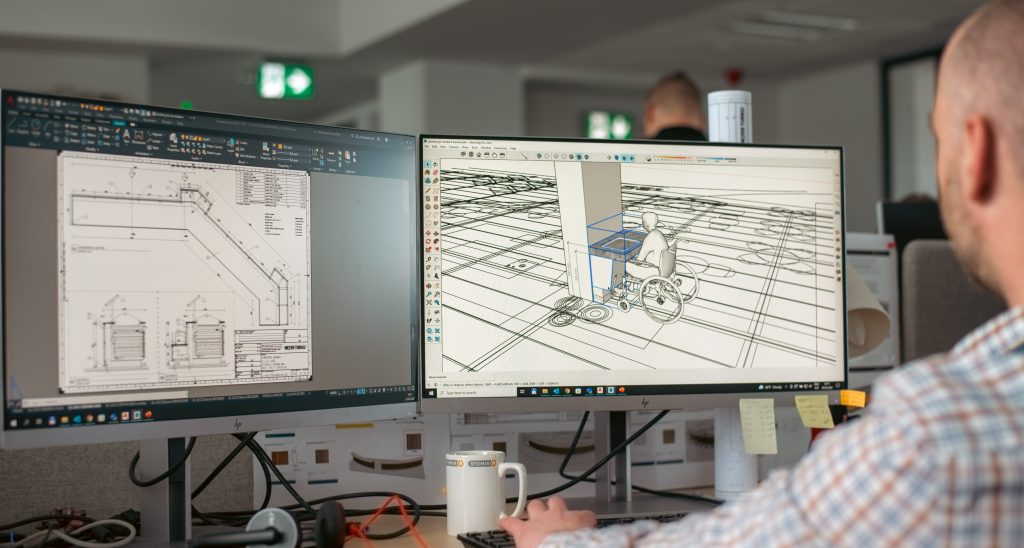
Challenges start to appear deeper when going into details. We always have surveys before the start of a project. In these surveys, we complete a full round of pictures, notes, and 3D scans of each area to intervene. Thanks to these, we better understand the possibilities and solutions to possible challenges we might encounter. We implement 3D scans as critical and innovative technology. We literally replicate an entire room in our computer programs. This allows us to place new furniture in the correct place. Count the proper amount of materials for better project management and an accurate realization in each dry dock.

And what does working in this industry give you?

Construction is an exciting career. You can see what’s behind a pretty wall or above a bright ceiling. Working in the maritime industry has shown me a new kind of construction that moves and floats. This has given me a new perspective on how to consider a design that is in constant change, seen by many people from around the world.

This all sounds really interesting. To wrap up, could you tell us a bit about your work environment?

I’ve learned a lot from the people around me. Engineers and technicians with vast experience. Always willing to help and share knowledge. Thanks to the people, a day in the office is actually an enjoyable experience. This provides a good place to improve personally and as a team.


Interview conducted by Agata Dzienski, Marketing Specialist at Trident BMC

Meet our TEAM!

Interview with Krystian Kołakowski – ADA Program Manager, Trident BMC

Passed in 1990 and reformed over the years, the Americans with Disabilities Act (ADA) has radically improved the lives of people with disabilities. Because the Act also applies to cruises, the term ADA on board a cruise ship includes any modifications necessary to ensure that people with disabilities can enjoy their voyage as much as any other passenger. Trident BMC has a specialized team that creates the necessary outfits for newbuilds and modernizations; the team works worldwide. We interviewed Krystian Kolakowski, our project manager in charge of ADA.

Q: Trident has been involved in many ADA interior upgrades, could you please explain us what an ADA is?

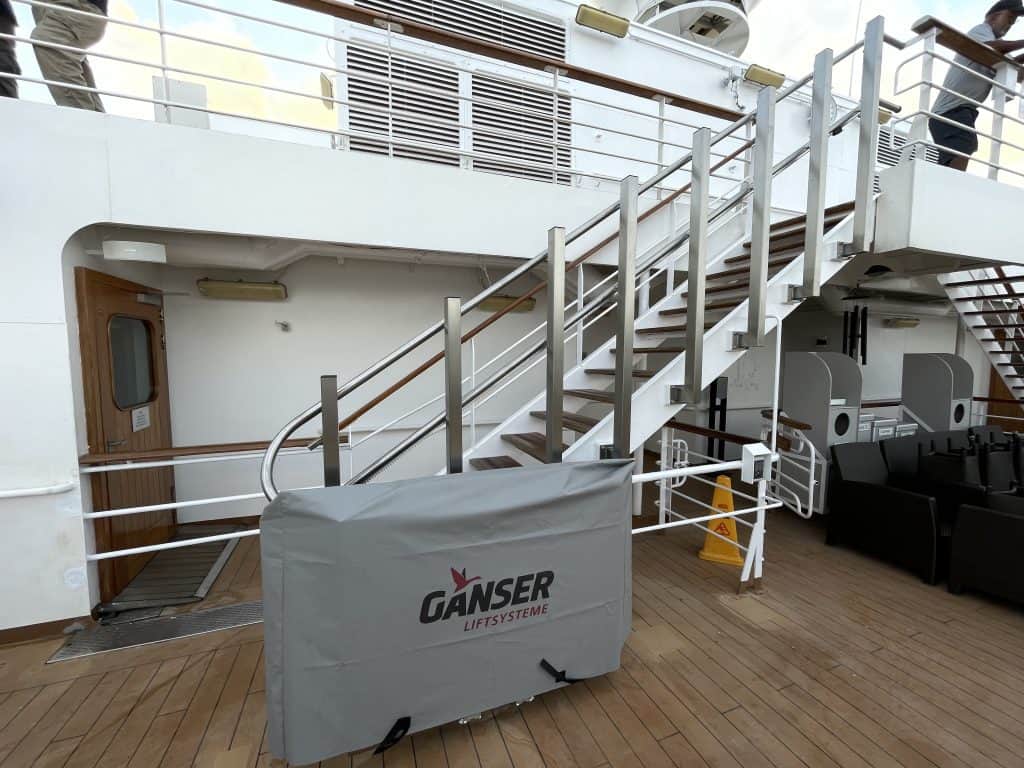
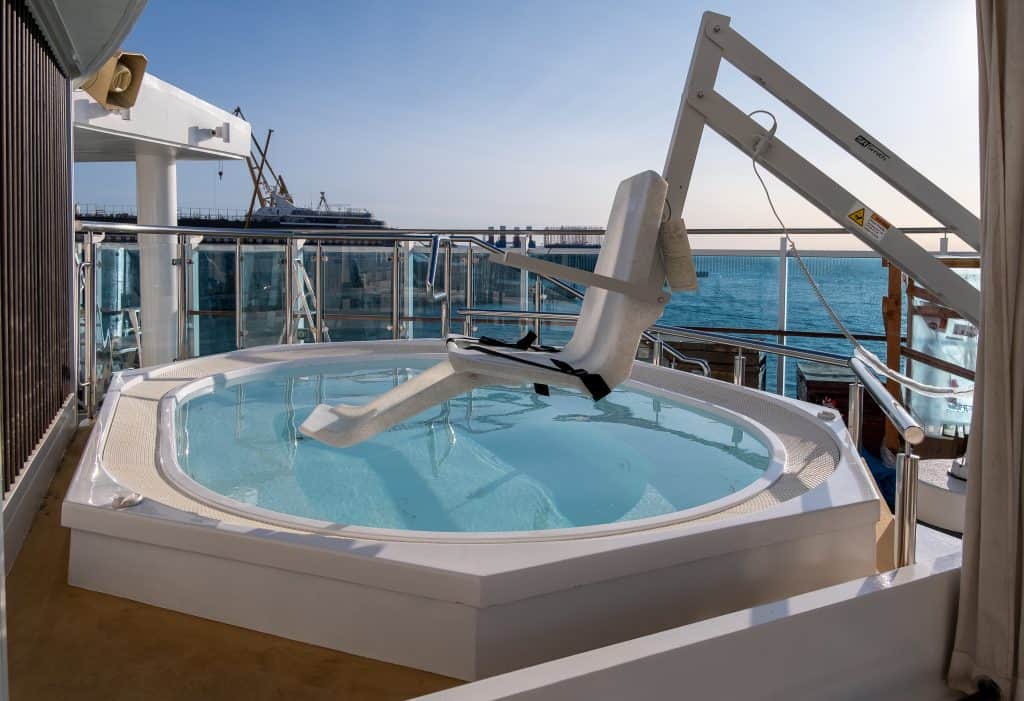
A: An ADA interior upgrade project on a cruise ship involves modifying the ship’s interior spaces to make them more accessible to individuals with disabilities. This could include installing wheelchair ramps, widening doorways, adding grab bars and handrails, and modifying cabin layouts to accommodate wheelchair users. 

Q: Why is it important to have ADA upgrades on a cruise ship?

A: Cruise ships are popular vacation destinations for people of all ages and abilities. It’s important that everyone, regardless of their physical abilities, can enjoy all the amenities and experiences that a cruise has to offer. ADA upgrades ensure that individuals with disabilities can navigate the ship safely and comfortably, and have access to all the same facilities and activities as other passengers.

Q: What are some of the challenges involved in ADA interior upgrade projects on cruise ships?

A: There are several challenges to consider when undertaking an ADA interior upgrade project on a cruise ship. One of the main challenges is working within the constraints of the ship’s existing infrastructure, which can be complex and difficult to modify. Additionally, there are strict regulations and guidelines governing accessibility on cruise ships, and it’s important to ensure that all modifications are compliant with these standards.

Q: Are there any upcoming ADA interior upgrade projects that Trident BMC is working on?

A: Yes, we have several ADA interior upgrade projects currently in the works with different cruise lines, including a major renovation of a large cruise ship’s public spaces and cabins to improve accessibility for individuals with disabilities.


Privacy Settings
We use cookies to enhance your experience while using our website. If you are using our Services via a browser you can restrict, block or remove cookies through your web browser settings. We also use content and scripts from third parties that may use tracking technologies. You can selectively provide your consent below to allow such third party embeds. For complete information about the cookies we use, data we collect and how we process them, please check our Privacy Policy
Youtube
Consent to display content from - Youtube
Vimeo
Consent to display content from - Vimeo
Google Maps
Consent to display content from - Google